Showing posts with label espionage. Show all posts

Monday, June 13, 2011

The Company


The Company (2002) is a huge door-stopper of a book (nearly 900 pages) that chronicles the Cold War as seen through the lens of the Central Intelligence Agency (CIA).  Mixing fact and fiction, the novel is a sweeping Clavell-style epic that begins with the end of World War 2 and continues through the collapse of the Soviet Union.

The Company (as the CIA is more colloquially known) revolves around a group of men who are recruited to join the newly minted agency after their graduation in the early 1950s.  They are soon thrown into the wild west that was post-war Europe and cut their teeth running agents and coordinating resistance within the Eastern bloc.  Soon the cohort becomes involved in several of the major covert operations that would come to characterize the West's struggle against the Soviet Union (e.g. the failed Bay of Pigs invasion).  These "on the ground" action sequences are some of the most compelling in the novel.  Littell portrays actual historic personalities alongside his fictional characters, and the two are blended together seamlessly.

Woven throughout the novel is a plot hatched by Starik, a sinister Soviet spymaster, to bring about the downfall of his glavny protivnik (principal adversary), America.  Taking the long view, Starik quietly embeds a double agent, SASHA, within the CIA and dangles tantalizing clues as to his identity in front of the Americans for decades in the hopes of creating a paralyzing climate of paranoia.  This plot arc, based on the career of the notorious spy-hunter James Jesus Angleton (featured prominently in The Company), provides continuity and links each major section of the novel together.  The climax of the novel comes as the fictional identity of SASHA is finally revealed (the real SASHA was never identified...if he even existed in the first place).

With a few notable exceptions, many of the fictional characters, though having well-developed personal stories, are fairly wooden.  The author also takes some liberties with his unflattering portrayal of real characters--Littell's Robert Kennedy is a rabid dog, and his Ronald Reagan a lost sheep.  Thankfully, these quibbles are fairly minor and the gripping plot quickly carries the reader past them.  Overall, The Company succeeds magnificently in its attempt to offer a panoramic look at the Cold War and the culture within the CIA during one of the more turbulent periods of American history.

Tuesday, April 19, 2011

The Defection of A.J. Lewinter


A friend recommended The Defection of A.J. Lewinter (1973) by Robert Littell during a recent tour of his bookshelf.  Having just finished an epic game of Twilight Struggle, the novel piqued my interest.  It turned out to be a smart, tightly written novel with a lot to say about the nonsensical nature of espionage.

The novel opens up with the attempted defection of A.J. Lewinter, an academic and specialist in the field of missile ceramics, to the Soviet Union.  While at a scientific conference in Tokyo, he walks into the Soviet embassy offering to share information related to the trajectory of warheads used in the MIRV missile system of the United States.  This is, of course, highly valuable information to the Soviets, as it could facilitate the development of a more capable Soviet missile defense system.

After this opening salvo, the novels alternates between the viewpoints of American and Soviet intelligence agents.  The Americans have to try and determine what, if any, security risk Lewinter's defection poses.  Did he actually have access to any sensitive information?  What were his motives?  It is likewise up to the Soviets to determine what exactly to do with Lewinter and his information.  Should they act on his information?  Is he best used as political propaganda?  Most importantly, could he be an American plant?  Littell does a good job of doling out enough information about Lewinter that any scenario proposed by either side seems plausible.

I didn't expect anything more than a good spy story when I first began the novel.  However, it quickly becomes clear that Littell is smartly commenting on the absurdity of intelligence operations.  Consider the following snippet from a conversation between two of Lewinter's Soviet handlers:
"...it is also possible the Americans were trying to make it appear as if they were reacting to a genuine defection in order to convince us that Lewinter had valuable information.  In which case, he would be a fraud.  Or the Americans may have been trying to convince us he's real knowing we'd discover they were trying to convince us he's real and conclude instead he's a fraud.  Which would mean they want us to think he's a fraud.  Which would mean he's genuine."
The novel is full of little bits that call into question the sanity of high-stakes espionage between the United States and Soviet Union.

The Defection of A.J. Lewinter has little in the way of overt action.  Espionage is portrayed as a highly cerebral psychological game (comparisons to chess are rampant) played by men in small rooms that are worlds apart from each other.  It is undoubtedly a more realistic portrayal of espionage than anything offered by the likes of James Bond or Jason Bourne.

I thoroughly enjoyed the novel, and I look forward to following it up soon with 'The Company,' Littell's definitive work about the American intelligence community.

Monday, May 17, 2010

Agent Zigzag

Agent Zigzag (2007) opens with a scene straight out of the movies.  Two lovebirds are relaxing in a restaurant enjoying a romantic dinner when, all of a sudden, two policeman appear, prompting the man to dive through a glass window and run up the beach to evade his pursuers.  This incident seems to nicely encapsulate the life and times of Edward Chapman, the man whose story Ben McIntyre has set out to tell in Agent Zigzag.

Eddie Chapman is a flamboyant, complicated character who spent much of his life on the wrong side of the law.  He is also, incredibly, one of the most successful double agents ever to operate for British intelligence.  This seeming dichotomy of character makes for a fascinating read.

When the story opens, he is involved in a gang of safe crackers implicated in a string of robberies in Britain.  He winds up incarcerated on the island of Jersey when World War 2 breaks out and the island is captured by Nazi Germany.  In a fairly ill-conceived bid to gain freedom, Chapman volunteers his services as a spy for the Germans.

He is eventually recruited and trained by the Abwehr to carry out sabotage missions within Britain.  His background as a criminal made him a particularly appealing candidate as a spy to the Germans.  Analysis suggested he was likely to feel ill-treated by the British and, as a result, less inclined to turn sides once released into Britain.  Also, his expertise with using explosives to crack safes could be harnessed for more sinister purposes.  Of course, Chapman, a consummate liar, did everything possible to reinforce these ideas.

Following a period of rigorous training, Chapman parachutes into Britain in the dead of night with orders to blow up an airplane production plant.  Instead of proceeding as planned, he heads straight to MI5 to volunteer as a double agent working for British intelligence!  While he is at first greeted with surprise and distrust, the British eventually realize what a useful tool they might have at their disposal.

Most of the account details his retraining by the British and subsequent missions working for both sides in Germany, Norway, and Britain.  Chapman, though brilliant, is prone to wild mood swings, fits of bravado, and bouts of romanticism.  This kind of behavior has his British and German handlers constantly on edge and questioning his motives--both sides are constantly confronted with the question of whether he is worth all the fuss.

Agent Zigzag is a highly compelling account of an almost larger-than-life personality.  At times, it is difficult to believe that Chapman's story is not fiction!

Tuesday, April 20, 2010

Spy


Spy (2003), as the title suggests, is a non-fiction work about espionage, a topic that has held perennial interest for me over the years.  Specifically, it chronicles the career of Robert P. Hanssen, an FBI agent who spied for both the Soviet Union and Russia over a 22 year period (1979-2001).  He is arguably considered the most damaging mole in the history of American intelligence, and was responsible for betraying at least three Soviets working for America who were later executed in the USSR for treason.  In addition to betraying American operatives, Hanssen sold highly sensitive information about US nuclear strategy and electronic intelligence gathering methods.     

Rather than go into great detail about Hanssen's career, I would urge you to read the book.  Suffice it to say that it is an interesting read for someone not overly familiar with the daily workings of the intelligence world.

One question nagged at me throughout the book and was never really explained to my satisfaction.  In 1979, Robert Hanssen had been an FBI special agent for a mere three years and recently transferred to the counter-intelligence section.  How is it that he was immediately given access to such highly sensitive information as the identity of Dmitri Polyakov (codename TOPHAT), one of the most productive CIA spies in history?  I was not clear if this sort of access would be customary or, more likely, was given to Hanssen as part of his new duties.  Either way, this seems like a gross error on the part of the FBI.  Of course, as the author notes several times over the course of Spy, hindsight is 20-20.

For me, the strong point of the book is in the final chapters, where Wise analyzes Hanssen's motivation for his espionage activities.  These chapters are largely based upon interviews with a psychologist who spent several weeks debriefing Hanssen in the immediate aftermath of his arrest.  In fact, Hanssen gave permission for the psychologist to break patient-doctor privilege so that this information might be presented.  It is clear that unlike some other notable spies, financial considerations were never in the forefront of Hanssen's mind (unlike the lavish lifestyle enjoyed by Aldrich Ames, the CIA mole who received over 2.7 million dollars for betraying upwards of ten agents working for the US and UK).  Nor was Hanssen ideologically motivated.  Instead, he seemed to harbor a serious inferiority complex that, over time, developed into a deep-seeded hatred of the FBI.

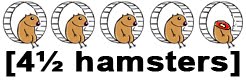
Wise's account stumbles in a few places (particularly unclear was the account of the Felix Bloch incident), though it is a fairly well written account and moves along at a good pace.  I give it four hamsters based mostly on my interest in the subject matter.

Thursday, November 5, 2009

A Man Called Intrepid

This fascinating book describes the birth and early years of Allied secret operations during World War 2.  The narrative centers around one man, William Stephenson (or INTREPID if you prefer his codename), a Canadian man of many (and considerable) talents who held the ear of both Churchill and Roosevelt.  Stephenson had an amazing ability to apply his substantial intellect to the merger of science and business during peacetime. When it became apparent during the 1930s that war would soon come to Britain, he transitioned his efforts away from business to preparing covert operations for the Allies.  His many contacts and relationships from around the world were a perfect cover for the people, products necessary for such an undertaking.

All sorts of capers against the backdrop of WW2 are recounted in A Man Called Intrepid.  There was the plot to destroy the Nazi-controlled Norsk Hydro plant in Norway to cut off Germany's supply of heavy water that might be used to develop atomic weapons.  There was the tale of the huge intelligence apparatus set up in Bermuda to monitor all incoming mail ships for the presence of Nazi correspondence (such as film microdots hidden in the periods of sentences!).  There was the story of the "famed Hungarian astrologer" who toured the world predicting Hitler's doom but was actually a hired hand of the BSC and OSS.  Documents were forged on typewriters that were constructed to have flaws identical to those seen in stolen papers originating from particular Nazi offices.  The list goes on and on...

I was struck by how every detail of an operation was meticulously carried out, down to "collecting" (voluntarily or otherwise) authentic European clothing and personal articles from overseas travelers entering America for use by agents working undercover.

The book does an excellent job recounting the political feeling in the United States in the years leading up to our entry in the war.  For instance, I had no idea that Roosevelt was forced to walk such a fine line in America with regards to his policy toward aid to Britain.  He was constantly under assault from isolationists as a war monger and even had to put up with pro-Nazi elements in the US government (note that the majority of these people did not support Nazi policies per se but were deluding themselves as to the scope of Hitler's plan).

Overall, an extremely interesting book that tells many of the stories not found in histories of conventional warfare.  I recommend it!