Friday, June 1, 2012
The Maze Runner
After reading The Hunger Games and enjoying it, I did what a lot of folks did and scoured the internet looking for books of a similar vein. One that kept coming up was The Maze Runner (2009), the first novel by James Dashner. I admit to feeling bad about comparing the two novels in the first sentence of my review, but it is almost unavoidable given their plots and intended audience. To be fair, Dashner wrote The Maze Runner nearly two years before The Hunger Games was published, so the rampant cries that his novel is a blatant attempt to capitalize on the success of THG are misleading.
At any rate, The Maze Runner does fall into the young adult dystopian genre that seems to have saturated the book market in recent years. The novel has an entirely intriguing premise: the main character, Thomas, wakes up in a strange glade inhabited by a group of other teenage boys. Like everyone else in the glade, Thomas has no clue how he got here. This glade actually lies in the center of an enormous, constantly changing maze seemingly without an exit. To top it off, every night a bunch of horrible creatures appear, bringing certain death to anyone not in the safety of the glade by sunset. Thomas is immediately drawn to the maze runners, the boys which daily risk life and limb to venture into the maze in an attempt to map it and reach an exit. Within days, a girl also arrives in the glade--needless to say this throws everyone into a tizzy because she is the first girl ever to arrive in the glade. It soon becomes clear that both Thomas and Teresa have a special role to play in the life of the glade.
That's about all I can say without giving away anything, so I'll leave it at that. While I found the plot to be quite engaging, the novel definitely stumbles when it comes to characterization. I didn't ever connect with anyone in the novel due to Dashner's rather weak portrayals. We are endlessly told about Thomas' emotional roller coaster--he is sad, scared, frustrated, confused, angry, but it all comes off as very shallow. I never "feel" anything that he is experiencing, and every other character is treated similarly. Given the great promise of the situation for high emotion and tension, this aspect of the writing was fairly disappointing. So while the plot of The Maze Runner is on par with The Hunger Games, the quality of writing is not.
I think a much more apt comparison is with To Your Scattered Bodies Go (1971) by Jose Philip Farmer. There is the same sense of awakening, wondrous setting, mysterious captors, and society building. I don't think it is too much of a spoiler to say that there is ultimately the same journey to discover just what the heck is going on. Again, in terms of writing, Dashner's novel pales in comparison to that of Farmer, but the two novels are quite similar in a general sense.
[some light spoilers here]
The end of the novel was also kind of a bummer. Dashner's reveal a la Ender's Game was reaching a bit given the truly chaotic nature of the maze environment. Furthermore, while there is some resolution to the situation at hand, the questions I most cared about were left completely hanging. Yes, it was written with sequels in mind (like most every other young adult book these days), but dangling some clue as to the circumstances in the larger world would have been nice.
[/spoilers]
So, to sum up, I did enjoy the The Maze Runner from start to finish. There is plenty of action and intrigue, and the writing for those parts is certainly up to snuff. I do think I will read on in the series, but it won't be zooming to the top of my to-be-read pile.
Wednesday, May 9, 2012
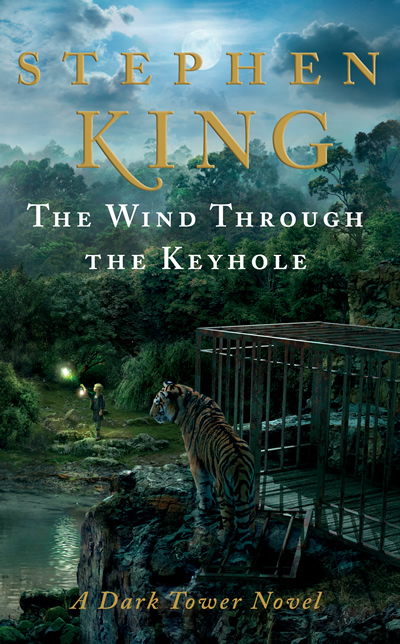
The Wind Through the Keyhole
Fear not, dear reader! I've once again been shaken out of silence. This time to review a book hot off the press. Stephen King's The Wind Through the Keyhole (2012) is what faithful fans of his Dark Tower series, myself included, have spent years waiting for. No, not word of yet another TV or film adaptation that will ultimately be relegated to the clearing at the end of the path. A new novel!The Wind Through the Keyhole falls in between Wizard and Glass and The Wolves of the Calla, and so can be considered volume #4.5 of the Dark Tower. During their journey away from the Emerald City, Roland and his ka-tet are forced to seek shelter from a once-in-a-generation storm known as the starkblast. With all hell breaking loose outside, Roland settles down to tell a tale that harkens back to the year following his mother's death when gunslingers were still a force of law in Mid-World.
Roland is sent by his father to investigate a series of mysterious deaths in an outlying holding thought to be the work of a skin man, aka a shapeshifter. In the aftermath of a fresh attack by the skin man, he befriends a boy who has lost his entire family to the creature. To calm him down and lend the boy strength, Roland relates a bedtime story told to him by his mother (who is oft on his mind in the wake of her death)--the legend of Tim Stoutheart and his dealings with Marten Broadcloak (aka the Man in Black, Randall Flagg), agent of the Crimson King and longtime nemesis of Roland himself.
The story of Tim Stoutheart and his coming of age provides the bulk of The Wind Through the Keyhole. Through this narration, we get a portrait of the world before it has moved on (an aspect of the series which I find particularly interesting). All the usual suspects that make the Dark Tower universe so compelling are there: cowboys, gunslingers, wizards, dragons, North Central Positronics, etc. Tim's story is heartfelt and quite charming, adding a light interlude to relieve the otherwise on-the-whole gritty series. Coming right off the events of Wizard and Glass, I think even the heartiest reader could use a bit of a breather!
While The Wind Through the Keyhole doesn't add heaps to the overall Dark Tower narrative, it nicely gives some further insight into Roland's character, particularly as it relates to the tragic circumstances of his mother's death.
It was really fabulous to spend some time with Roland and his ka-tet again, for I have rarely felt more of a connection to a group of characters. There was the merest whisper of a hint that we might not have heard the last of Tim Stoutheart, so here's to hoping that King will treat us fans to more of the Dark Tower in the years to come!
A final tidbit: one of the guardians of the Beams, who just happens to be a lion, is named Aslan! How cool is that?
Wednesday, November 16, 2011
Long time, no entry...Part I
Well, unfortunately (or fortunately, depending on how you look at it), real life has once again caught up with me, and I haven't had time to properly review any books. Never fear! I have been steadily reading away as usual, keeping track of everything over at Goodreads! Since it is obvious that I stand no chance of ever catching up with my back log of books to review, I thought I'd go ahead and post a more succinct summary of my recent reads in a multi-part series. So...without any further ado:
The Windup Girl by Paolo Bacigalupi (2009)
Co-winner of the 2010 Hugo Award (tied with The City & The City, previously reviewed by yours truly here). The novel takes place in a near-future where energy sources have become severely depleted, forcing massive changes on society. Food production is completely controlled by mega-corporations who engineer plants to suit their clients' needs. An extremely good book with a lot of thought-provoking ideas about where humanity is heading if we continue on with our unsustainable rate of consumption. [5 hamsters]
The Brothers K by David James Duncan (1992)
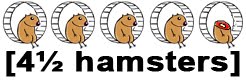
This book follows the ups and downs of a midwestern family whose four sons come of age in the '50s and '60s. Narrated by the youngest son, it focuses on the father's minor league baseball career and how his brothers deal very differently with the reality of war. Laced throughout is some of the best writing about families that I've ever read--it really captures the love and dynamics of family in an unforgettable way. [4.5 hamsters]
The Hunger Games by Suzanne Collins (2008)
Is there anyone who doesn't know what The Hunger Games is about? In a post-apocalyptic world, a central government holds the Hunger Games, where teenagers from different districts are pitted against one another in a televised battle from which there is only one survivor. Fantastic premise, though the main plot is strongly reminiscent of Stephen King's The Long Walk (see my review here). This is a heck of a good book--one of those that I simply couldn't read fast enough. Highly, highly recommended. [5 hamsters]
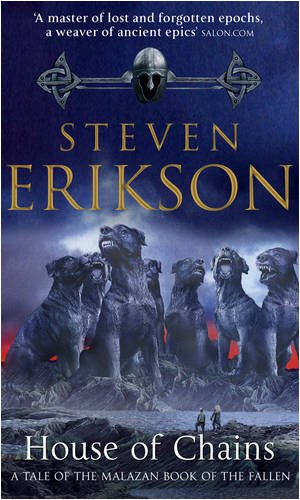
House of Chains by Stephen Erikson (2002)
This is the fourth book in the Malazan Book of the Fallen series (reviews of previous volumes here). These novels continue to be somewhat convoluted and a challenge to piece together, but they also continue to capture my fascination. House of Chains, a direct sequel to Deadhouse Gates, was a little slower moving than its predecessors, but carried the story forward nicely once everything got going. [3.5 hamsters]
The Broken Wheel by David Wingrove (1990)
The second volume to the Chung Kuo series (first volume reviewed here). No surprises in this one--nothing deep but a fast paced story in a well-realized future world. Wingrove is in the process of reissuing an expanded 20-volume (if you can believe it) set of Chung Kuo books which I'm pretty excited about checking out in the future since it fills in some of the gaps in the original series. [3.5 hamsters]
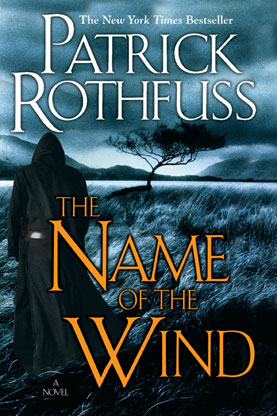
The Name of the Wind by Patrick Rothfuss (2007)
There was a lot of buzz around this novel on the nets, so I thought I'd check out Rothfuss's debut novel. It is a really interesting book despite employing more than a few fantasy cliches. The best description I can give it sells it short but here goes anyway: a mature version of Harry Potter. Not quite fair, but the comparison is inevitable. A well written book, it has one of the most logical, developed systems of magic of any novel I've come across. There aren't people going around pointing wands at each other and saying cute phrases to wield magic; instead, a caster acts as more of a conduit for energies from the natural world. Great stuff! [4.5 hamsters]
Stay tuned! More updates to come soon!
Monday, August 8, 2011
A Dance With Dragons
Never fear, dear reader, I've not forgotten about the blog but, rather, have been attending to more important things in real life (like earning a Ph.D.). As it happens, it takes one of the biggest publishing events in geekdom to draw me out of my silence. So, without further ado:
[Don't worry, I'm not going to include any real spoilers in the review.]
Unless you've been living under a rock lately, you probably know about George R.R. Martin's epic fantasy series, A Song of Ice and Fire (ASOIAF). The HBO series based on the first novel in the series, A Game of Thrones, has been hugely successful and drawn people to ASOIAF that I otherwise would never have expected to show any interest. My Goodreads and Facebook feeds have lit up in recent weeks with people talking about ASOIAF. We're talking females who I went to high school here, for goodness sakes. The powers of HBO are truly mind boggling.
Well, A Dance With Dragons is the fifth novel in ASOIAF. It has been in the works for six, count 'em, SIX years. Everyone (read: geeks on the internet) was getting a bit worried about GRRM's ability to pull this one off after his long delay. Also, he is not exactly a young man (or a particularly healthy-looking man for that matter), so this break was (is?) possibly threatening the completion of the series (let's not forget the tragic death of Robert Jordan). Well, I'm happy to say that GRRM's latest novel is a solid effort; GRRM has lost none of his flair with the quill.
So: Is there action? Adventure? Intrigue? Violence? Sex? Fire-breathing dragons? The answer to all these is, happily, YES! Do we meet up with our favorite characters so cruelly abandoned in A Feast for Crows? Yes! Are there any events that are going to rock the foundations of ASOIAF? I guess so (note the lack of enthusiasm; see below).
So what gives? Why the 3.5 hamster rating? While the novel has all these things and more, you will be forced to meander with each character across Westeros and the Free Cities many times over in between encounters of substance. No form of transportation has been left out: wagon, river boat, horse, sea galleon, and, most importantly, good ol' feet. A Dance With Dragons cries out for a good editor--I could cut several hundred pages out of the book without raising a sweat and there would more than ample room to tell the same story.
This brings me to my biggest problem with the novel. Simply put: the novel spectacularly fails to push the main plot forward. Characters are shuttled around the world, some things happen, but the threads of main plot are coming together so achingly slowly (or in several cases not at all), at this rate it is going to take at least 15 more books to reach some semblance of a conclusion to all this.
All this being said, the novel is a good read, certainly better than A Feast for Crows. I look forward with great anticipation to the next book in the series, so I guess on that account, A Dance With Dragons is a spectacular success!
Monday, June 13, 2011
The Company
The Company (2002) is a huge door-stopper of a book (nearly 900 pages) that chronicles the Cold War as seen through the lens of the Central Intelligence Agency (CIA). Mixing fact and fiction, the novel is a sweeping Clavell-style epic that begins with the end of World War 2 and continues through the collapse of the Soviet Union.
The Company (as the CIA is more colloquially known) revolves around a group of men who are recruited to join the newly minted agency after their graduation in the early 1950s. They are soon thrown into the wild west that was post-war Europe and cut their teeth running agents and coordinating resistance within the Eastern bloc. Soon the cohort becomes involved in several of the major covert operations that would come to characterize the West's struggle against the Soviet Union (e.g. the failed Bay of Pigs invasion). These "on the ground" action sequences are some of the most compelling in the novel. Littell portrays actual historic personalities alongside his fictional characters, and the two are blended together seamlessly.
Woven throughout the novel is a plot hatched by Starik, a sinister Soviet spymaster, to bring about the downfall of his glavny protivnik (principal adversary), America. Taking the long view, Starik quietly embeds a double agent, SASHA, within the CIA and dangles tantalizing clues as to his identity in front of the Americans for decades in the hopes of creating a paralyzing climate of paranoia. This plot arc, based on the career of the notorious spy-hunter James Jesus Angleton (featured prominently in The Company), provides continuity and links each major section of the novel together. The climax of the novel comes as the fictional identity of SASHA is finally revealed (the real SASHA was never identified...if he even existed in the first place).
With a few notable exceptions, many of the fictional characters, though having well-developed personal stories, are fairly wooden. The author also takes some liberties with his unflattering portrayal of real characters--Littell's Robert Kennedy is a rabid dog, and his Ronald Reagan a lost sheep. Thankfully, these quibbles are fairly minor and the gripping plot quickly carries the reader past them. Overall, The Company succeeds magnificently in its attempt to offer a panoramic look at the Cold War and the culture within the CIA during one of the more turbulent periods of American history.
Subscribe to:
Posts (Atom)